Introduction
Writing a case report is fundamental in plastic surgical education to share novel clinical observations, rare complications, and innovative surgical solutions encountered during residency.1 Thus, paving the way for studies of higher levels of evidence. Case report sharing enables surgeons to exchange insights, methodologies and outcomes, promoting knowledge-sharing of solutions to challenging and/or rare clinical cases.2 The SCARE statement offers consensus-based guidelines for structured surgical case reporting, providing educational and methodological guidance to surgery residents3 and aid successful peer-reviewing to maintain scientific rigor and ethical standards.4,5 Writing a clear, concise, and impactful case report is a crucial skill for early-career surgeons.5,6 Unfortunately, the complexities of medical writing are often not fully addressed in postgraduate training,7,8 leading young surgeons to struggle in producing high-quality manuscripts suitable for peer-reviewed journals.9 This study evaluates submitted plastic-surgery case reports to identify specialty-specific areas for improvement and to determine qualitative characteristics most appreciated by specialists.
Methods
A descriptive mixed methods study was conducted on the evaluations of plastic surgical case reporting submitted by plastic surgeons in training. The cases were submitted through the online plastic surgery learning platform PlastSurgeon.com from 2023 to 2025. Submitted cases were prescreened by an internal panel of five surgeons, two holding PhD-degrees, to filter the best presented cases to the specialist panel. The specialist panel comprised 23 international plastic surgery specialists from Denmark, Germany, Sweden and Switzerland, including professors, associate professors, senior consultants and chief surgeons from University Hospitals in Denmark. The study was conducted as an educational study and did not meet the requirements for institutional board review. Patient consent was obtained for all patients enrolled in the case competition for publication. The consent was obtained by PlastSurgeon in compliance with the Danish Data Protection Regulation.
The specialist panel reviewed the case submissions and scored the cases based on six key parameters (1-10 scale): 1. Quality of photos; 2. Quality of text; 3. Clinical solution to the case; 4. Reproducibility of the case when following the procedure step-by-step; 5. Quality of references, pearls and pitfalls; 6. Overall presentation/mediation of the case (double weighted 2-20 scale). Table 1 shows the case assessment scales for each parameter.
All evaluations were submitted by the specialist panel anonymously/blinded through SurveyMonkey.com and collected to a prefabricated Excel sheet to be analyzed.
The mean score and standard deviation for each parameter were calculated. The parameters with the lowest mean scores were identified as areas of greatest weakness and vice versa. Qualitative analyses were conducted for case parameters with high-scoring means in the upper mean quartile (7.5 or above for parameters assessed from 1 to 10 and a mean of 15.0 or above for parameters assessed from 2-20). The first and last author independently screened the methodology of high-scoring parameters and collected the assessments into a prefabricated Excel sheet. High-scoring methodologies were differentiated into categories 1) + indicating the high-scoring methodology was present in one to two cases; 2) ++ indicating the high-scoring methodology was present in three to four cases; 3) +++ indicating the high-scoring methodology was present in five or more cases.
Results
Fifty-one surgical case reports across 4 continents (North America, South America, Europe and Asia) were submitted to the annual case competition during the three-year period. The best 27 cases were included in the study (Table 2) after internal screening, of which eight were from 2023, eight were from 2024, and 11 were from 2025.
The mean overall scores were as follows for the six parameters: 6.78 (SD=0.81) for quality of photos and videos; 6.63 (SD=0.55) for quality of written text; 7.30 (SD=0.86) for final solution of the case; 6.84 (SD=0.71) for reproducibility of the case following step-by-step; 6.56 (SD=0.62) for quality of references, pearls, and pitfalls; and 13.42 (SD=1.37) for overall presentation of the case. The mean score across the six parameters is displayed in table 3.
Twenty-nine times a case parameter scored a mean of 7.5 or above. The scores were distributed as following: five within quality of photos/videos; three within quality of written text; 10 within final solution of the case; six within reproducibility of the case following step-by-step; one within quality of references, pearls and pitfalls. Four cases had a mean score above 15 within overall presentation of the case.
The qualitative evaluation of cases with a mean score above 7.5 is displayed in table 4 as a measure of high-quality case reporting.
Discussion
This study assessed specialist plastic surgeons’ evaluation of case reports submitted by young surgeons over a three-year period.
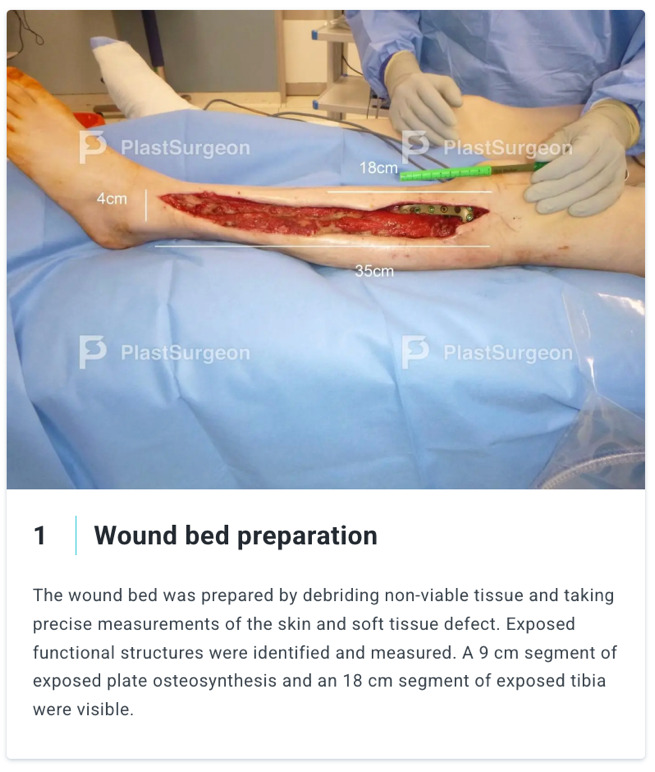
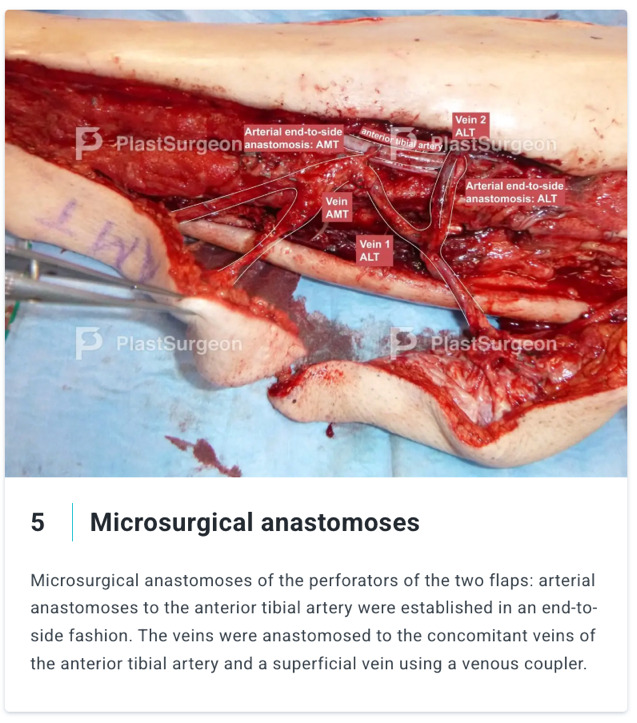
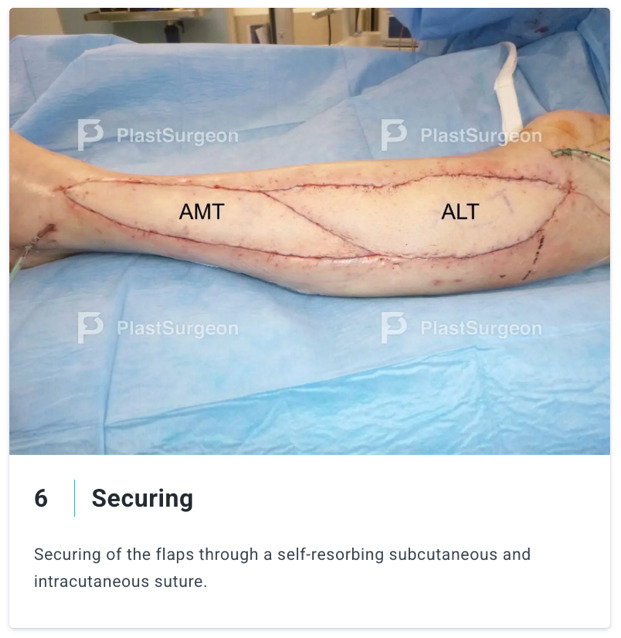
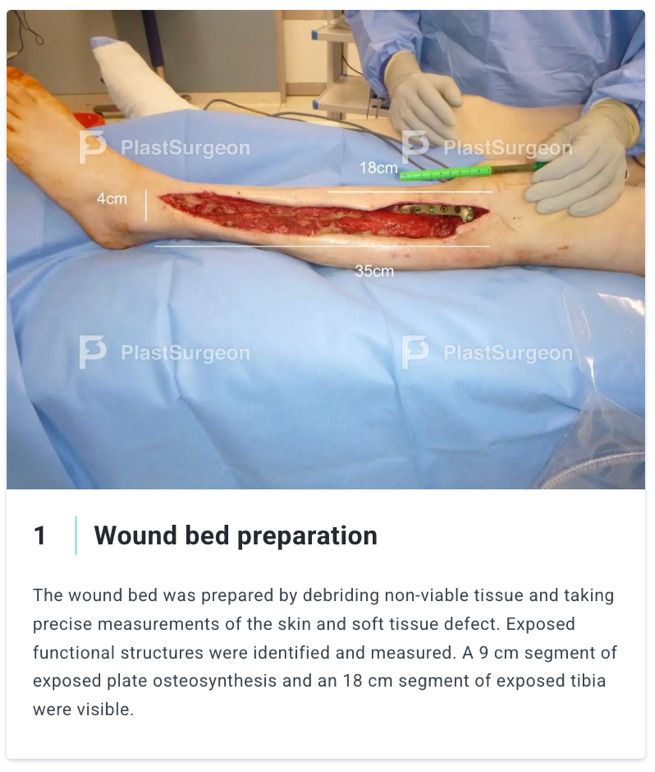
Cases with high-scoring images displayed high resolution, pre-operative surgical drawings/illustrations, multiple angles and surgical steps, perioperative markings of anatomical structures and diagnostic imaging. Referring to the SCARE guidelines point 19, it states that images and/or videos must be included where relevant and include pre-, peri- and post intervention. The guidelines further state adequate annotation on images.10 To some extent the SCARE point captures the relevance of visual aids to mediate understanding. We believe that the plastic surgical assessment conducted in this study calls for more in-depth visual case reporting due to the nature of this specialty. Preoperative markings are crucial for in-patient preparation, surgical understanding and mediation of considerations to peers11,12 and it is therefore of essence to include it in plastic surgical case reporting. It is generally observed that cases that lack comprehensive step-by-step visual aid are assessed less successful in mediating the cases. This overlaps with the study’s assessment of reproducibility following the case step-by-step (SCARE point 12c) in which well-described preoperative, perioperative and postoperative considerations, and explanatory images and/or surgical drawings yielded successful assessments. Not surprisingly, the study reports error-free grammar and precise wording were present in high-scoring cases in the category, quality of written texts which has previously been described.13,14 The clinical solution to the case was added to the questionnaire, which corresponds to SCARE point 12b. The study’s qualitative analysis reported well described rationale for choice of surgery, combining two or more techniques/methods to solve complicated surgical challenges (innovative solution) and well described preoperative considerations of surgical alternatives as key drivers for successful case reporting. As each case report in this study was assessed by a panel of 11 or more specialist plastic surgeons, we believe that it is relevant to discuss using two or more existing methods/techniques to solve a challenging clinical problem. It seems highly appreciated by specialists to rely on basic principles when faced with a challenging case by combining such for successful case mediation. In 2024, Grosu-Bularda et al. proposed a problem-solving approach to solve complex tissue defects.15 They describe various reconstructive methods but conclude that complex tissue defects must take various factors into account, including etiology, defect characteristics, restoration of form, function and psychological aspects, patient compliance, the surgeon’s skills, and emerging technology.15 Their study mentions combinations of emerging techniques and technologies; however, it does not mention the principle of combining basic plastic surgical techniques to solve challenging cases. We believe it is a great philosophy to rely on the basics before exploring new and less tried methods. See Figures 1, 2 and 3 for a case example of high-resolution image with drawings, combining surgical techniques to obtain a great and safe reconstructive result of the lower leg.
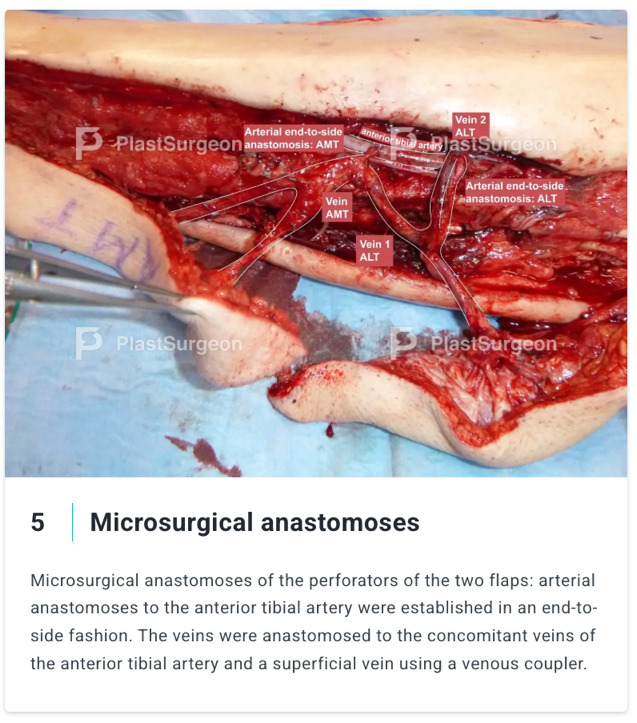
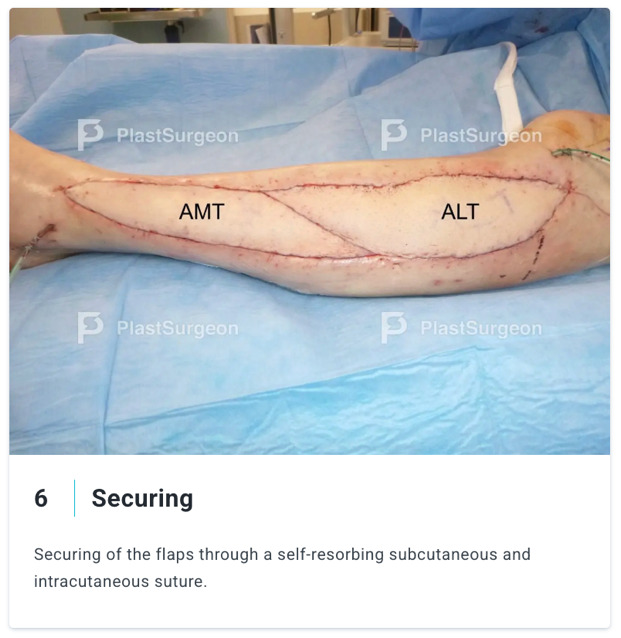
The quality of references, pearls and pitfalls are assessed together in this questionnaire with rationale to all being a measure to evaluate the authors’ ability to reflect on prior art in relation to the case. The study, which described in detail the pearls and pitfalls (SCARE point 13d, 14b-d), including references to appropriate literature, received greater recognition from the Specialists. Analyses of the three parts independently, was unfortunately not possible due to the nature of the questionnaire. The final question concerned the overall presentation of the case. Not surprisingly, cases that had multiple high-scoring categories were evaluated best in overall presentation. The quality of text was evaluated as the best predictor for overall presentation of the case, which highlights the outmost importance of well written and structured case reporting.
Deficiencies in scientific writing are currently an issue and may be due to the lack of standardized scientific training in medicine which makes early-career surgeons unequipped with the skills necessary to effectively communicate their clinical experiences and research findings. Incorporating good practice in case report writing into residency curricula would most likely enhance the quality and impact of scholarly work produced by young surgeons.16,17 This study adds a valuable insight into actionable measures that can improve young doctors’ future surgical case reports.
Limitations
This study is conducted as a retrospective cohort study (Evidence level III).18 The scoring instrument was not validated before implementation and selection bias could occur due to prescreening.
Conclusion
Our study demonstrates the great value of specialist assessment in identifying areas for improvement in plastic surgical case reporting. By addressing low-rating areas and qualifying high-performing papers this aims to improve future plastic surgical case reporting, and we can empower the next generation of plastic surgeons to contribute meaningfully to scientific literature and advance the field of plastic surgery.
Funding
This study received funding from the online educational platform PlastSurgeon.